
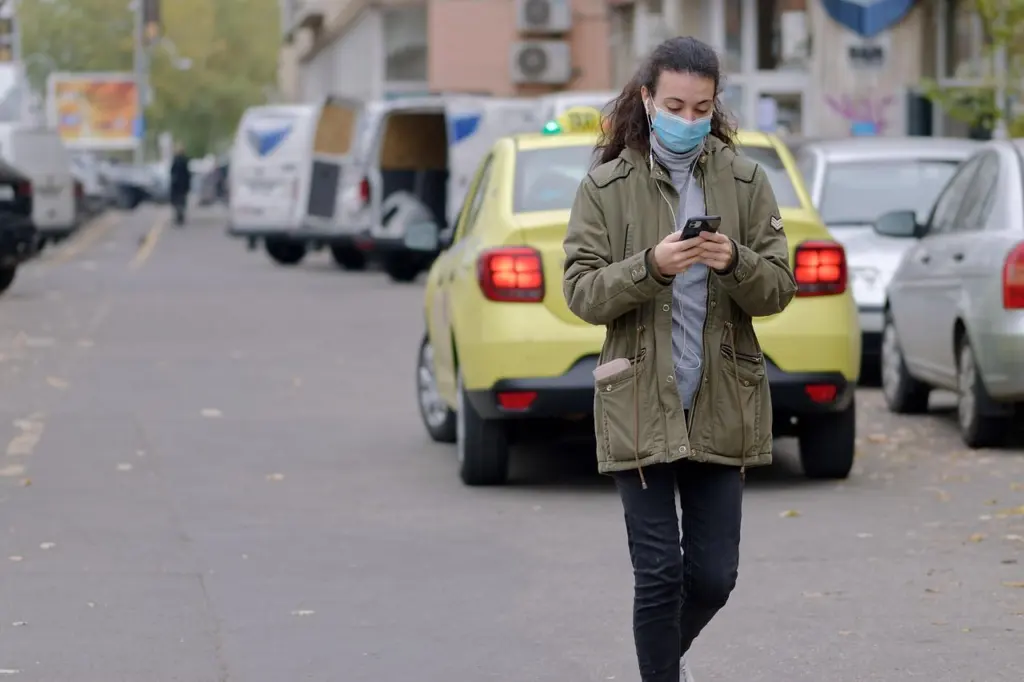
Contact tracing app privacy is the question of how much personal data a phone app may collect, store and share while helping health authorities warn people who were near an infected person. European regulators answered it with strict limits.
The topic sits at the centre of data privacy debates, because the pandemic forced governments, engineers and citizens to weigh public health against personal data in a matter of weeks.
What a contact tracing app is meant to do
Conventional contact tracing relies on trained staff who interview a person with a confirmed infection and identify the people who were in close contact. The European Centre for Disease Prevention and Control (ECDC) describes the role of apps in that process as supportive. In its technical report on contact tracing, third update, dated 18 November 2020, the agency notes that several EU and EEA countries adopted digital proximity tracing based on Bluetooth technology in a privacy-preserving manner. The same report states that digital proximity tracing can complement, but not replace, conventional contact tracing, because not everyone will have the app.
That framing matters for privacy. If an app is a supplement and not a substitute, the case for collecting large amounts of data is weaker. A tool that only needs to tell a handful of people “you may have been exposed” does not need to know who they are, where they live or where they have been.
Proximity data versus location data
Two very different kinds of data can power a tracing app. Proximity data records which phones were close to each other, usually through short-range Bluetooth signals. Location data records where a phone was, usually through GPS or mobile network information. European guidance drew a firm line between them.
The eHealth Network, the voluntary network of national health authorities in the EU, adopted its Common EU Toolbox for mobile applications by consensus in Brussels on 15 April 2020. The toolbox states that location data is not necessary nor recommended for the purpose of contact tracing apps, since their goal is not to follow the movements of individuals or to enforce prescriptions. It adds that collecting an individual’s movements would violate the principle of data minimisation and would create major security and privacy issues.
The European Data Protection Board (EDPB) took the same direction in its guidelines on the use of location data and contact tracing tools, published on 21 April 2020. The EDPB is the body that brings together the EU’s national data protection authorities, and its guidelines explain how the GDPR applies to these tools. Readers who want the legal background can start with GDPR explained, and then check the current text of the law or ask a qualified lawyer for advice on a specific project.
Decentralised and centralised designs
The toolbox groups the apps then in use or development into at least two broad categories, and the difference is mostly about where the contact data lives.
In a decentralised design, the toolbox says, the proximity data generated by the app remains only on the device. The apps generate arbitrary identifiers of the phones in contact with the user, and those identifiers are stored on the device with no additional personal information or phone numbers. The toolbox also notes that providing a mobile phone number or other personal data at installation is not necessary, because an alert is delivered automatically through the app when a user is notified.
The centralised alternative moves processing to a server run by an authority. The toolbox flags the risks of designs that collect more identifying data. It warns that options which do not keep personal data processing to the absolute minimum may make people less willing to install and use the app, and that centralised storage of mobile phone numbers could create risks of data breaches and cyberattacks.
| Design question | Privacy-protective answer in the EU toolbox |
|---|---|
| Where do contact records live? | On the user’s device, as arbitrary identifiers |
| Is a phone number needed at installation? | No, an alert can be delivered through the app |
| Should movements be tracked? | No, location data is not recommended |
| What happens when the crisis ends? | Automatic dismantling and deletion of remaining data |
The table summarises requirements set out in the eHealth Network toolbox, which remains the primary source for each row.
Safeguards regulators asked for
Beyond architecture, the European guidance set out behavioural safeguards that still read as a useful checklist for anyone designing a health or civic app. The toolbox summarises the essential requirements for national apps as follows: they should be voluntary, approved by the national health authority, privacy-preserving, with personal data securely encrypted, and dismantled as soon as no longer needed.
Several of these ideas map directly onto familiar privacy principles:
- Voluntary use. The toolbox says installation should be consent-based, with users given complete and clear information on the intended use and processing of their data.
- Data minimisation. Developers are told to limit app permissions as much as possible, minimise the data processed, pseudonymise or anonymise where possible, protect what remains and delete it when it is no longer needed.
- Temporary purpose. The toolbox calls for automated self-dismantling, including deletion of all remaining personal data and proximity information, as soon as the crisis is over.
- No tracking. Pseudonyms should have no relation to long-lived personally identifiable information, so an identifier cannot be traced back to a named person.
None of this is a legal opinion, and rules differ between countries and over time. It does show that the privacy debate was not only about whether to build apps but about how narrowly their purpose should be drawn and how firmly their end date should be fixed.
Effectiveness, coverage and public trust
Privacy design and public health value are linked through adoption. The ECDC report says that when assessing mobile apps, it is important to understand population coverage as it is related to effectiveness. An app that few people install can only warn few people, however carefully it was built.
The toolbox also acknowledges technical limits. It points out that Bluetooth detection could deliver false positives when it detects proximity to the device of someone wearing a face mask, or even on the opposite side of a wall. Those limits are a reason for apps to present their alerts as prompts for follow-up by health staff, and not as verdicts.
Public opinion research shows why trust was central. A preprint titled COVID-19 Contact Tracing and Privacy: A Longitudinal Study of Public Opinion reports on seven months of online surveys about contact tracing and privacy in the United States, begun before the first peak of the virus there. Because it is a preprint, its findings are best read as one input and not a settled result. Its stated aim is to inform policy makers, technologists, researchers and public health experts on whether and how to use technology while considering potential privacy concerns.
Lessons for people who build data tools
The contact tracing episode left a set of practical lessons that apply well beyond pandemics, including to civic projects and hackathon prototypes that handle personal data.
- Start from the question, not the data. If the goal is to notify exposed people, proximity identifiers are enough and location histories are not.
- Keep data on the device when possible. The decentralised pattern shows that a useful service can run without a central store of who met whom.
- Write the end date into the design. A tool built for a crisis should specify when and how its data is deleted.
- Be clear with users. Consent means little without plain information about what is collected and why.
- Accept that a tool is part of a system. Apps supported human health workers and could not replace them.
Those lessons connect to wider questions about fairness, purpose and accountability, which are covered in the guide to the ethical use of data.
Frequently asked questions
Did European guidance recommend collecting location data for contact tracing?
No. The eHealth Network toolbox states that location data is not necessary nor recommended for contact tracing apps, because their goal is not to follow the movements of individuals.
What is the difference between a decentralised and a centralised app?
In the decentralised model described in the toolbox, proximity data generated by the app stays on the user’s device. Centralised designs process more data on a server, which the toolbox links to higher risks if that data is breached.
Could an app replace manual contact tracing?
According to the ECDC, digital proximity tracing can complement but not replace conventional contact tracing, because not everyone will have the app.
Is this article legal or medical advice?
No. It summarises public documents from European health and data protection bodies as of their publication dates. Readers with a legal question should consult the current law or a qualified lawyer, and health questions belong with a health professional.