
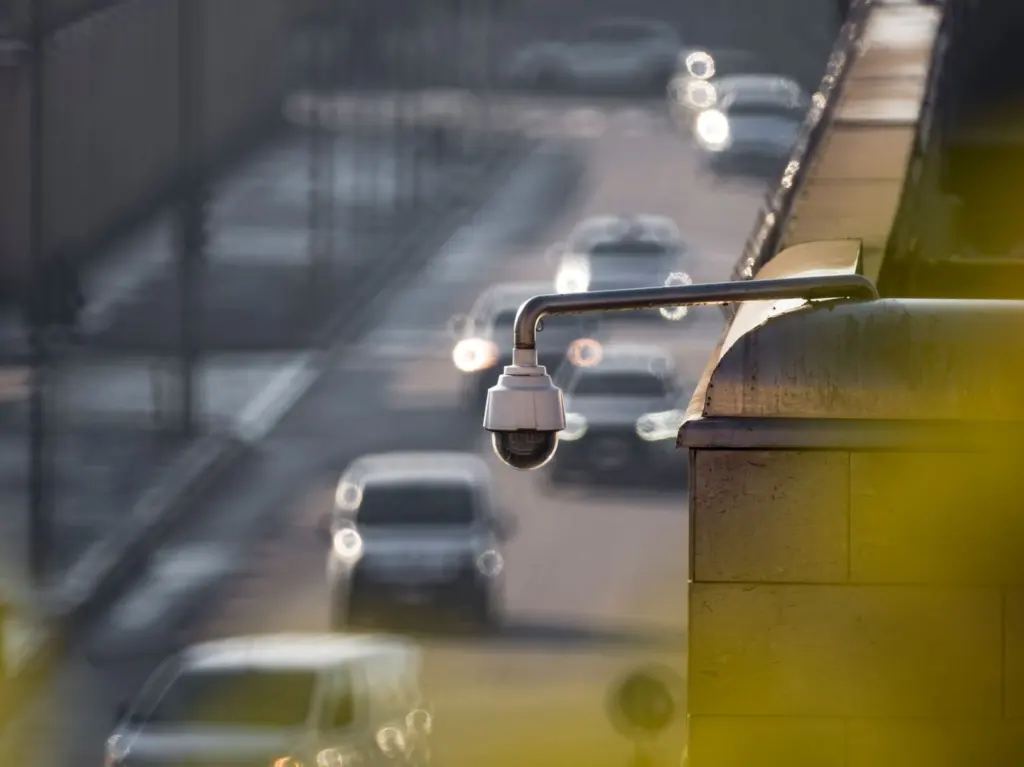
Smart city privacy is the set of rules, design choices and habits that decide what a city may collect through sensors and cameras, and what happens to that data afterwards. It matters because public space offers no easy way to opt out.
It is one corner of the wider field of data privacy, where rights, risks and everyday protections are laid out in full.
What smart city privacy actually covers
A smart city is a place where networked devices gather information about streets, buildings, traffic, energy use and people, and where software turns that information into decisions. The devices can be as plain as a traffic counter or as invasive as a camera that recognises faces. The privacy question is the same in each case: does the information relate to an identifiable person, and if so, who decides how it is used?
In a private setting such as a phone app, a person can usually decline a service and walk away. A street is different. A resident walking to work cannot read a terms-of-service page before passing a camera. This is why regulators treat public-space monitoring with particular care, and why the usual idea of consent, a box ticked by an individual, rarely fits a city sensor network.
Privacy in this context is not only about names and faces. A stream of location pings, a record of when a doorway sensor fired, or a pattern of energy use can reveal when a household is at home, who visits, and what routines a family follows. Combined with other datasets, material that looks anonymous can often be linked back to a person. Good practice therefore starts by asking what a sensor is for before asking what it can capture.
Sensors, cameras and the data they generate
City data tends to fall into a few families, each with its own risks. The list below is a practical way to think about them.
- Video and imaging: fixed cameras, traffic cameras, body-worn cameras and plate readers. These capture faces, vehicles and behaviour, and the footage can be searched later.
- Movement and presence sensors: Wi-Fi and Bluetooth counters, infrared people counters and parking sensors. They are often described as anonymous, but device identifiers can be stable enough to follow a person across a district.
- Environmental sensors: noise, air quality and weather. These usually carry little personal data, although a microphone can pick up speech if it is poorly designed.
- Utility and building data: smart meters and connected lighting. Fine-grained readings can reveal household habits.
- Transaction data: transit cards, bike-share and parking payments. These link movement to an account.
The European Data Protection Board, the body that brings together the EU’s data protection authorities, addressed the camera problem directly in its guidelines on video devices, which it published in final form on 30 January 2020. The guidelines observe that many tools are now implemented to exploit the images captured and turn traditional cameras into smart cameras, and that the volume of data they generate raises the risk of reuse for purposes the public never expected, such as marketing or employee monitoring (EDPB guidelines, PDF).

Why consent is hard in public space
Under European data protection law, consent is only one of several legal grounds for handling personal data, and for a camera on a public street it is rarely the workable one. A person cannot give free, informed consent to something they pass in a few seconds. Authorities therefore tend to focus on necessity and proportionality: is the system a suitable and necessary way to reach a defined purpose, and would a less intrusive measure do?
The EDPB guidelines make this a first step. They say that before installing a video system, the controller should always critically examine whether the measure is suitable and necessary to reach its goal. That is data minimization applied to a lamp post. Readers who want the principle explained from first principles can read the guide to data minimization.
Transparency is the second pillar. Because individuals cannot negotiate with a sensor, the law expects clear notice instead. The EDPB recommends a layered approach: the most important information should be displayed on the warning sign itself, the first layer, while the further mandatory details are provided by other means, the second layer (EDPB guidelines, PDF).
| Layer | What it carries | Where it sits |
|---|---|---|
| First layer | Purposes of processing, who is responsible, the existence of individuals’ rights and the greatest impacts | A visible warning sign at the point of monitoring |
| Second layer | The remaining mandatory details, including how long footage is kept and who receives it | A website, information sheet or other easy-to-reach source that the sign points to |
The table summarises the layered notice model described in the EDPB video device guidelines.
Retention, secondary use and who holds the data
Collection is just one side of the picture. A camera network that deletes footage quickly is a very different thing from one that keeps everything indefinitely. On storage, the EDPB says personal data should in most cases, for example when the aim is detecting vandalism, be erased, ideally automatically, after a few days. It adds that the longer the storage period is set, especially beyond 72 hours, the more argument is needed for the legitimacy of the purpose and the necessity of storage (EDPB guidelines, PDF).
Secondary use is the quieter danger. Data gathered to manage traffic can be requested by police, sold to analytics firms or blended with commercial datasets. A city can reduce that risk in several ways:
- Write the purpose of each sensor down before it is installed, and treat any new purpose as a new decision that needs its own review.
- Process data at the edge where possible, so that a camera sends a count of vehicles rather than a video stream.
- Separate identifiers from measurements, and keep the key that links them under tight control.
- Publish a register of the systems in use, who operates them, and who receives the data.
- Give residents a route to ask what is held about them and to challenge it.
Another design idea is to move control toward the individual instead of the operator. A personal data store lets a resident hold their own records and decide which services may read them, which is a different model from a city holding everything centrally.
Lessons from Toronto’s Quayside project
The most discussed case of a smart city plan colliding with privacy concerns is Sidewalk Labs’ proposal for the Quayside waterfront in Toronto. Sidewalk Labs, the smart-city side project of Google’s parent company Alphabet, and Waterfront Toronto set out to redevelop the Quayside area in October 2017, according to RCR Wireless. That report says the project was controversial partly because Sidewalk Labs had been reluctant to confirm how data gathered about citizens and the environment would be governed.
The same RCR Wireless report notes that Ontario’s former privacy commissioner resigned in late 2018 from a consulting role at Sidewalk Labs over its failure to guarantee citizens’ personal data would be protected. Sidewalk Labs responded by proposing an independent urban data trust to take charge of city data, an idea later scrapped. By the time the project ended, its remit had been reduced to 12 acres on the Quayside, instead of 190 acres in the original proposal, and the company cited pandemic-era economic uncertainty when it withdrew.
An academic assessment published in the journal Surveillance & Society adds a governance lens. Its authors argue that the Urban Data Trust failed as a model because it lacked clarity regarding the nature of the problems it was meant to solve, how accountability and oversight are secured, and its relation to existing data protection law (Surveillance & Society). The lesson for other cities is practical: a new data body does not replace clear legal duties, and residents need to see who answers for decisions before sensors go in, not after.
Frameworks that help cities manage privacy risk
Cities do not have to invent a method from scratch. The US National Institute of Standards and Technology describes its Privacy Framework as a voluntary tool developed in collaboration with stakeholders, intended to help organizations identify and manage privacy risk to build innovative products and services while protecting individuals’ privacy (NIST Privacy Framework). A municipality can use that kind of risk-management approach to review a proposed sensor deployment in the same way it reviews a construction project: identify the risk, decide on controls, and record the decision.
In practice a sensible review asks a short list of questions before any purchase. What problem is the sensor solving, and is there evidence that it works? Could the same result be achieved with aggregate data? Who will operate the system, and what contract terms limit the vendor’s own use of the data? How will residents be told, and how will complaints be handled? Answers to these questions, written in plain language and published, are the foundation of public trust.
Community involvement matters as much as the technical controls. Local residents, civic groups and technologists can examine a proposal from angles that a procurement team may miss. Civic hackathons and open data projects have shown that residents can build useful tools from public data, but the same energy should be directed at scrutinising what is collected in the first place. Privacy rules are laws that differ by country and, in the United States, by state, so anyone designing or reviewing a deployment should consult the current law and a qualified lawyer rather than rely on a general guide.
Frequently asked questions
Is smart city data always personal data?
No. Readings such as air quality or noise levels usually do not identify anyone. Data becomes personal when it relates to an identifiable person, including indirectly, for example through a persistent device identifier or a licence plate.
Can a city camera be used for any purpose once it is installed?
Under the approach the EDPB sets out, the purpose has to be defined in advance, and reuse for unrelated aims such as marketing or employee monitoring needs its own justification. The guidelines stress safeguards against misuse for unexpected purposes.
How long should camera footage be kept?
The EDPB says that in most cases, such as detecting vandalism, footage should be erased, ideally automatically, after a few days, and that storage beyond 72 hours calls for stronger justification.
What is the role of a data trust in a smart city?
A data trust is a governance body meant to oversee how city data is used. The Toronto experience shows that it only works if its purpose, accountability and relationship to the law are clear from the start.
Does this guide give legal advice?
No. It summarises regulator guidance and published reporting as of the dates given. Laws change and vary by place, so readers should consult the current text of the law or a qualified lawyer.