
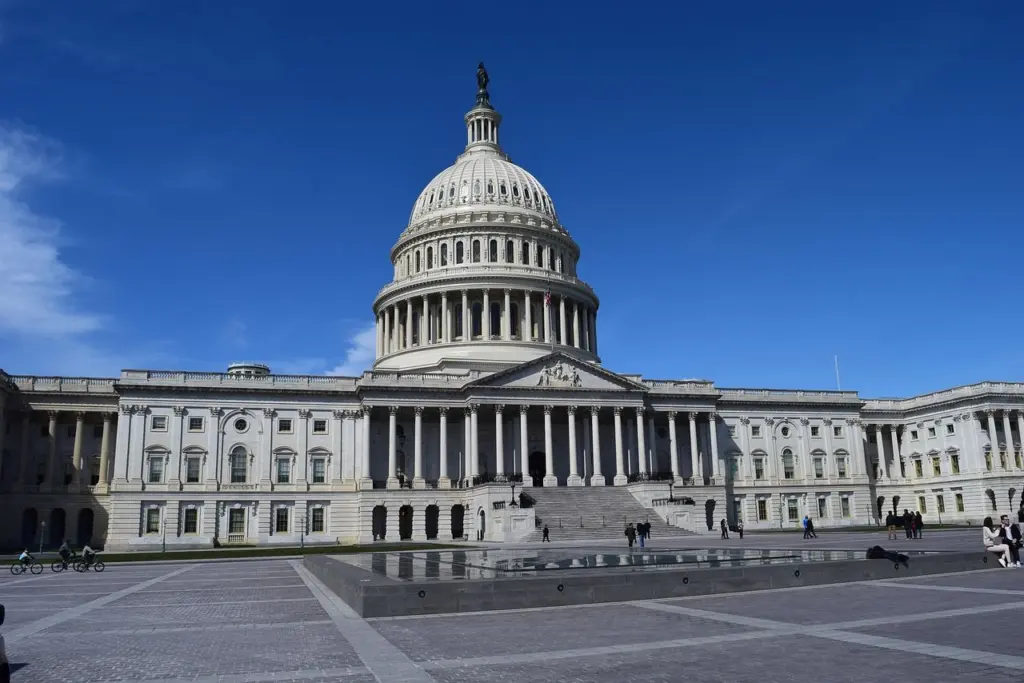
US state privacy laws are statutes passed by individual states that give residents rights over their personal data, starting with California’s CCPA. They fill a gap left by the absence of one comprehensive federal privacy law.
This guide sits under the wider topic of data privacy and describes how the state laws work, using regulator pages. It is an independent editorial guide, not legal advice.
Why the United States has a patchwork of state laws
Europe has a single regulation that applies across its member states. The United States does not. Instead of one national statute covering all personal data, there are sector rules for areas such as health and children, and a growing number of comprehensive laws passed state by state. The European model is covered in GDPR explained, a separate guide on this site, and comparing the two shows why the American landscape feels fragmented.
The tracker kept by the International Association of Privacy Professionals describes its scope this way: the IAPP state tracker states that “This tool tracks comprehensive US state privacy bills to help our members stay informed of the changing state privacy landscape.” The same page explains that “Industry-specific, information-specific and narrowly scoped bills, e.g., data security bills, are not included.” In other words, a law counts as a comprehensive state privacy law when it governs personal information broadly rather than in one sector or for one type of data.
Because bills move quickly, anyone who needs the current list of enacted states should read the tracker itself rather than rely on any static summary, including this one.
California: the CCPA and the CPRA amendments
California moved first. The state attorney general’s page, updated on August 28, 2026, explains that the California Consumer Privacy Act of 2018 “gives consumers more control over the personal information that businesses collect about them.” The attorney general lists the core rights as the right to know, the right to delete, the right to opt out of sale or sharing, and the right to non-discrimination for exercising those rights.
The law was then expanded by voters. The same page says that in November of 2020, California voters approved Proposition 24, the CPRA, “which amended the CCPA and added new additional privacy protections that began on January 1, 2023.” The attorney general adds that the CPRA amends the CCPA and does not create a separate law, which is why the office usually refers to it as the CCPA, as amended.
The amendments added two further rights. According to the California attorney general, consumers gained “The right to correct inaccurate personal information that a business has about them” and a right to limit the use and disclosure of sensitive personal information. The opt-out right also reaches signals sent from a browser: the page describes “The right to opt-out of the sale or sharing of their personal information including via the GPC”, where GPC refers to the Global Privacy Control.
Two features of California’s design shaped what followed. First, it is a rights-based law: a resident asks a business to do something, such as delete or stop selling data, and the business must respond. Second, it regulates the sale and sharing of data, which pushed companies to publish clear notices and to build opt-out mechanisms that many of them then offered more widely.

The laws that followed California
Other states did not copy California line by line. Many instead adopted a model that uses different vocabulary: a “controller” decides why and how personal data is processed, and a “processor” handles data on the controller’s behalf. Connecticut’s attorney general uses exactly this language in its guidance, and Texas does too.
Connecticut shows how the second wave looks. Its attorney general reports that on May 10, 2022, Governor Ned Lamont signed Senate Bill 6, “making Connecticut one of the first states to pass a comprehensive consumer privacy law.” The same page says the act took effect on July 1, 2023, and that “As of January 1, 2025, businesses covered under the CTDPA must honor universal opt out preference signals sent by Connecticut residents.” That requirement echoes the California approach to browser-based signals.
Texas followed with its own statute. The Texas attorney general’s page for the Texas Data Privacy and Security Act gives the effective date as July 1, 2024, and it applies to companies that conduct business in Texas or produce a product or service consumed by residents of Texas. The overview lists consumer rights to know, correct, delete and opt out of certain processing, and the right not to face retaliation or discrimination for exercising them.
These examples show a pattern. The core rights are similar across states, but the details differ in scope, thresholds, exemptions and enforcement. That is why privacy teams talk about a patchwork even when the laws look alike at first glance.
Who is covered and who is exempt
Each state decides which businesses must comply. Connecticut sets a threshold: its attorney general says the act applies to persons conducting business in Connecticut or targeting its residents that “Controlled or processed the personal data of at least 35,000 consumers” excluding data processed solely to complete payment transactions, that handled sensitive data, or that offered personal data for sale. Consumer health data controllers are covered regardless of size.
Texas takes a different route. The Texas page says that small businesses, as defined by the federal Small Business Administration, are generally exempt from the act, except that a small business that sells the sensitive data of a consumer must first obtain the consumer’s consent. The result is that a tiny company might fall outside the Texas rules yet be covered in Connecticut if it processes sensitive data.
| Question | California | Connecticut |
|---|---|---|
| Where the rules come from | The CCPA, amended by the CPRA | The Connecticut Data Privacy Act |
| Opt-out signals | Opt-out of sale or sharing, including via the Global Privacy Control | Covered businesses must honor universal opt out preference signals |
| Who must comply | Many businesses, including data brokers | Businesses meeting a consumer-count, sensitive-data or data-sale test |
The table summarises the attorney general pages for California and Connecticut, as read when this guide was prepared.
What these laws give residents in practice
For an individual, the practical value of state privacy law is the ability to send a request and expect an answer. The common rights are to find out what a company holds, to correct mistakes, to delete data and to stop certain uses such as targeted advertising or the sale of data.
Timing matters too. The Texas overview says a controller must respond to an authenticated consumer request without undue delay but “no later than 45 days after receiving the request”, with an extension possible when reasonably necessary if the company explains the reason inside the first period. Residents of other states should check the timeline written into their own state’s law, since it varies.
The laws also push companies toward better notices. Texas, for instance, requires a reasonably accessible and clear privacy notice that lists the categories of personal data processed, the purposes, the categories shared with third parties and how to submit and appeal requests. A well-written notice is the first thing a resident can read to learn what a business does with their information.
An idea sometimes raised alongside these laws is giving individuals a technical home for their own information. The guide to a personal data store explains one such approach, in which the individual holds the data and grants access, rather than relying only on requests made after the fact.
What businesses and developers should take from this
Small teams building apps, including those that start at hackathons, often collect more personal data than they realise: email addresses, location, device identifiers. State laws turn those habits into obligations once a project grows past an exemption threshold, handles sensitive data or sells data.
Three habits help regardless of the specific law. Collect only the data the product needs, since Texas, for example, asks controllers to limit collection to what is “adequate, relevant, and reasonably necessary” for the disclosed purposes. Publish a clear privacy notice. And design a simple way for users to make requests, which Texas notes can be as little as an email address for companies that operate exclusively online and have a direct relationship with the consumer.
None of this replaces advice from a qualified lawyer. The attorney general pages themselves say so: the Connecticut FAQ states that it “does not constitute legal advice or an opinion from the Attorney General”, and the Texas overview says it “is for informational purposes only and is not legal advice.”
Keeping up with a moving target
New state laws, amendments and regulations appear every year, and enforcement reports show how regulators read the text. Connecticut, for example, links enforcement reports on its privacy page, and California publishes enforcement case examples and rulemaking activity alongside its CCPA material.
The most reliable method is to go to the source: the state legislature for the text of a law, the attorney general or privacy regulator for guidance, and a tracker such as the IAPP’s for a cross-state view. Treat any summary, including the date-stamped statements above, as a snapshot of the pages as they stood when read.
Frequently asked questions
Is there a single US privacy law for the whole country?
There is no one comprehensive federal statute of the kind found in Europe. Comprehensive protection comes from individual state laws, alongside rules for specific sectors.
Which state passed the first comprehensive privacy law?
California’s CCPA is widely treated as the starting point, and it was later amended by the CPRA. Connecticut’s attorney general describes its own act as making the state one of the first to pass such a law.
Do these laws apply to every business?
No. Each state sets thresholds and exemptions. Connecticut uses consumer-count and sensitive-data tests, while Texas generally exempts small businesses as defined by the federal Small Business Administration.
What is a universal opt-out signal?
It is a browser or device setting, such as the Global Privacy Control, that tells websites a user does not want their data sold or shared. California and Connecticut both refer to honoring such signals.
Where can I find the current law for my state?
Start with your state attorney general’s privacy page and the legislature’s published statutes, and consult a qualified lawyer for advice on a specific situation.